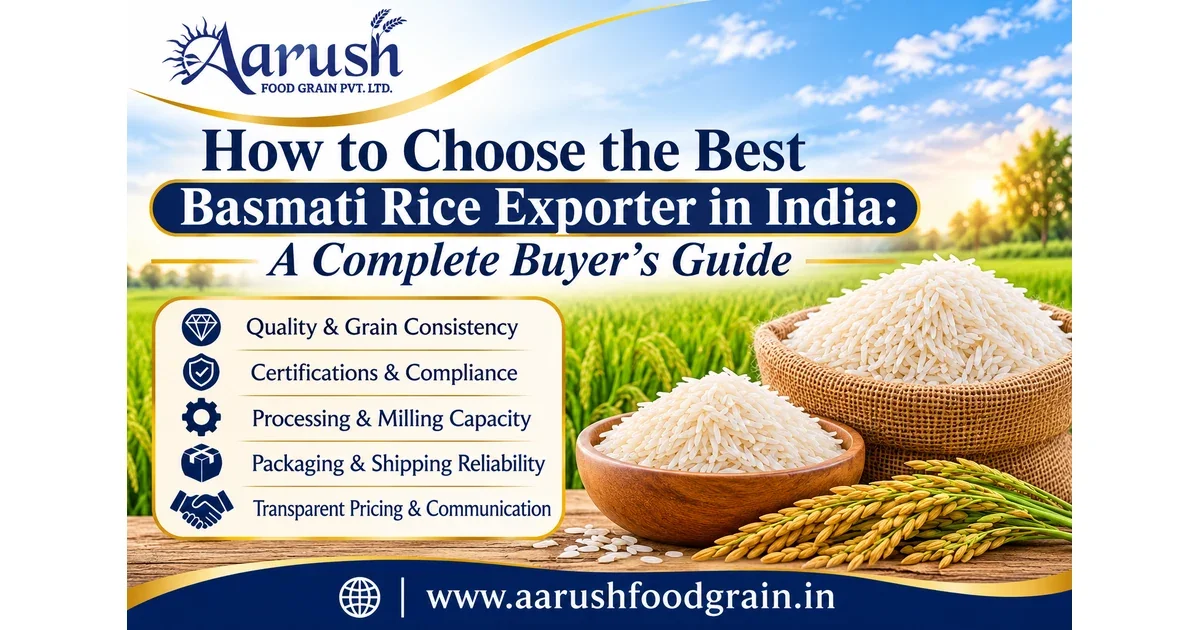
How to Choose the Best Basmati Rice Exporter in India: A Complete Buyer's Guide
India is widely recognised for producing premium-quality Basmati rice, known for its long grains, distinctive aroma, delicate flavour, and excellent cooking properties. With increasing demand across international markets, choosing the right supplier has become an important decision for importers, wholesalers, distributors, and food businesses. A reliable Basmati Rice Exporter in India can help buyers maintain consistent product quality, secure competitive pricing, and ensure smooth international deliveries.
However, with numerous companies operating in the rice export industry, finding the right export partner requires careful evaluation. Buyers should consider several factors, including product quality, certifications, processing facilities, packaging options, pricing, and export experience.
This guide explains the important points to consider before selecting a trusted Basmati rice export partner for your business.
1. Check the Quality and Grain Characteristics of Basmati Rice
Product quality should always be the first consideration when selecting a rice exporter. Premium Basmati rice is recognised for its extra-long grains, natural fragrance, delicate texture, and ability to elongate after cooking.
Before placing a bulk order, buyers should request product samples to evaluate the rice quality. Pay attention to:
Grain Length: Check whether the rice meets your preferred grain size requirements.
Natural Aroma: High-quality Basmati rice has a distinctive fragrance.
Grain Uniformity: Consistent grain size and appearance indicate proper processing and grading.
Cooking Performance: The rice should cook well while maintaining its texture and grain separation.
Purity: Check for broken grains, foreign particles, and other impurities.
A professional exporter should provide clear product specifications and help buyers select suitable rice varieties according to their market requirements.
2. Verify Certifications and Quality Standards
International rice trading involves meeting different food safety and import requirements. Therefore, checking an exporter's certifications and quality management practices is essential.
Before finalising your supplier, ask about the certifications and registrations relevant to its operations. Depending on the destination market, these may include:
Not every certificate applies to every exporter or destination. Buyers should verify the authenticity and validity of relevant documents before entering into a business agreement.
Choosing a Basmati Rice Exporter in India that follows proper quality control procedures can help reduce potential supply issues and support compliance with international food safety requirements.
3. Explore Different Basmati Rice Varieties
Basmati rice is available in several varieties, each offering different grain characteristics, aroma, cooking performance, and market applications.
Some commonly traded varieties include:
Traditional Basmati Rice
Traditional Basmati is valued for its authentic aroma, flavour, and cooking characteristics. It is commonly preferred for premium rice dishes.
1121 Basmati Rice
This variety is popular in international markets because of its extra-long grain length and impressive elongation after cooking.
1509 Basmati Rice
Known for its long grains and cooking properties, 1509 Basmati rice is widely used by restaurants, wholesalers, and food distributors.
Pusa Basmati Rice
Pusa varieties offer different grain and aroma characteristics and are used in various domestic and international markets.
The right variety depends on your customers, target market, budget, and product positioning. Always discuss available varieties and specifications with your supplier before ordering.
4. Evaluate Processing and Packaging Facilities
Modern processing facilities play an important role in maintaining rice quality. Proper cleaning, sorting, grading, polishing, and packaging help ensure that the final product meets buyer expectations.
When evaluating a potential supplier, ask about its processing capabilities and quality inspection procedures.
Packaging is equally important, especially when rice is transported over long distances. A reliable exporter should offer packaging solutions according to the buyer's requirements, such as:
Packaging materials should protect the rice against moisture, contamination, and damage during transportation. Clear labelling with product details, batch information, net weight, and other required declarations also helps support international distribution.
5. Compare Pricing and Minimum Order Requirements
Price is an important factor when purchasing rice in bulk, but selecting a supplier based only on the lowest quotation may create problems later.
Compare quotations from multiple suppliers and understand what is included in the offered price. Consider the rice variety, grain specifications, packaging, order quantity, transportation, insurance, and applicable export charges.
You should also clarify the minimum order quantity (MOQ), payment terms, and delivery conditions before confirming an order.
A transparent Basmati Rice Exporter in India should provide a detailed quotation and explain the factors affecting the final cost. This makes it easier to calculate your purchasing expenses and maintain healthy profit margins.
6. Check Export Experience and International Shipping Capabilities
Export experience is another important factor when choosing a long-term business partner. International shipments involve documentation, customs procedures, logistics coordination, and compliance with destination-country requirements.
Ask potential suppliers about their experience with international orders and the markets they serve. Also, discuss important shipping arrangements, including:
Port of loading and destination port
Estimated shipment timelines
Export documentation
Container loading arrangements
Shipping and insurance responsibilities
Delivery terms such as FOB and CIF
Clear communication about these arrangements can help avoid misunderstandings and unnecessary delays.
7. Research the Company's Reputation and Reliability
Before placing an order, research the company's background and business credentials. A genuine supplier should be able to provide verifiable company information, business registration details, contact information, and product specifications.
You can also ask for business references, previous export experience, and customer feedback where available.
Pay attention to how the company responds to enquiries. Professional communication, transparent pricing, clear documentation, and realistic delivery commitments are positive indicators when evaluating an export partner.
8. Why Choose Aarush Food Grain?
Selecting the right supplier is about building a dependable business relationship rather than completing a single transaction. Aarush Food Grain aims to serve the requirements of buyers looking for Indian rice products and dependable business coordination.
When evaluating Aarush Food Grain as your potential rice sourcing partner, buyers can inquire about available Basmati rice varieties, product specifications, packaging requirements, bulk order quantities, and export arrangements.
The company can be contacted to discuss individual purchasing requirements and obtain relevant product and business information before finalising an order.
For importers, distributors, wholesalers, and food businesses, selecting a suitable Basmati Rice Exporter in India means finding a supplier whose product offerings and business processes match their requirements.
Conclusion
Choosing the best Basmati rice export partner requires more than comparing prices. Product quality, grain specifications, certifications, processing facilities, packaging, export documentation, and business reliability all play an important role in making the right decision.
International buyers should always evaluate samples, verify relevant documents, compare quotations, and discuss shipping terms before placing bulk orders.
With proper research and careful supplier selection, businesses can establish long-term sourcing relationships and meet the growing demand for premium Indian Basmati rice. Aarush Food Grain can be approached for product enquiries and discussions about rice sourcing requirements.
Make an informed purchasing decision by focusing on quality, transparency, and reliable business communication.
Contact Aarush Food Grain Pvt. Ltd.
Ready to talk to a Basmati Rice Exporter in India you can reach directly? Call or email for samples, prices and shipping details.
Aarush Food Grain Pvt. Ltd.
👤 Ankit Gupta (Director): +91 90177 77716
👤 Ashok Kumar (International Sales Head): +91 82958 96035
📧 export@aarushfood.com
🌐 https://www.aarushfoodgrain.in